General Information
Everything you need to know before you go - Essential facts, the National Park, climate, etc.
About the Galapagos Islands
The Galapagos Islands are a volcanic archipelago approximately 1,000 km (625 mi) off the coast of Ecuador in the Pacific Ocean; a UNESCO World Heritage Site and home to some of the world’s most unique and fearless wildlife.
The archipelago consists of 13 mayor islands, and over 100 smaller islands, rocks and islets. Out of all these islands, only 4 islands are inhabited, Santa Cruz, San Cristobal, Isabela and Floreana, totalling to a population of 33,000 inhabitants (2020) between them.
National Park
The Galapagos Islands was Ecuador’s first national park. 97% of the area is national park, while the remaining 3% is distributed between the inhabited areas in the islands stated above.
The surrounding waters of the archipelago are the second largest marine reserve in the world (the Galapagos Marine Reserve - GMR), with an area covering 133,000 km2 (51,000 sq mi).
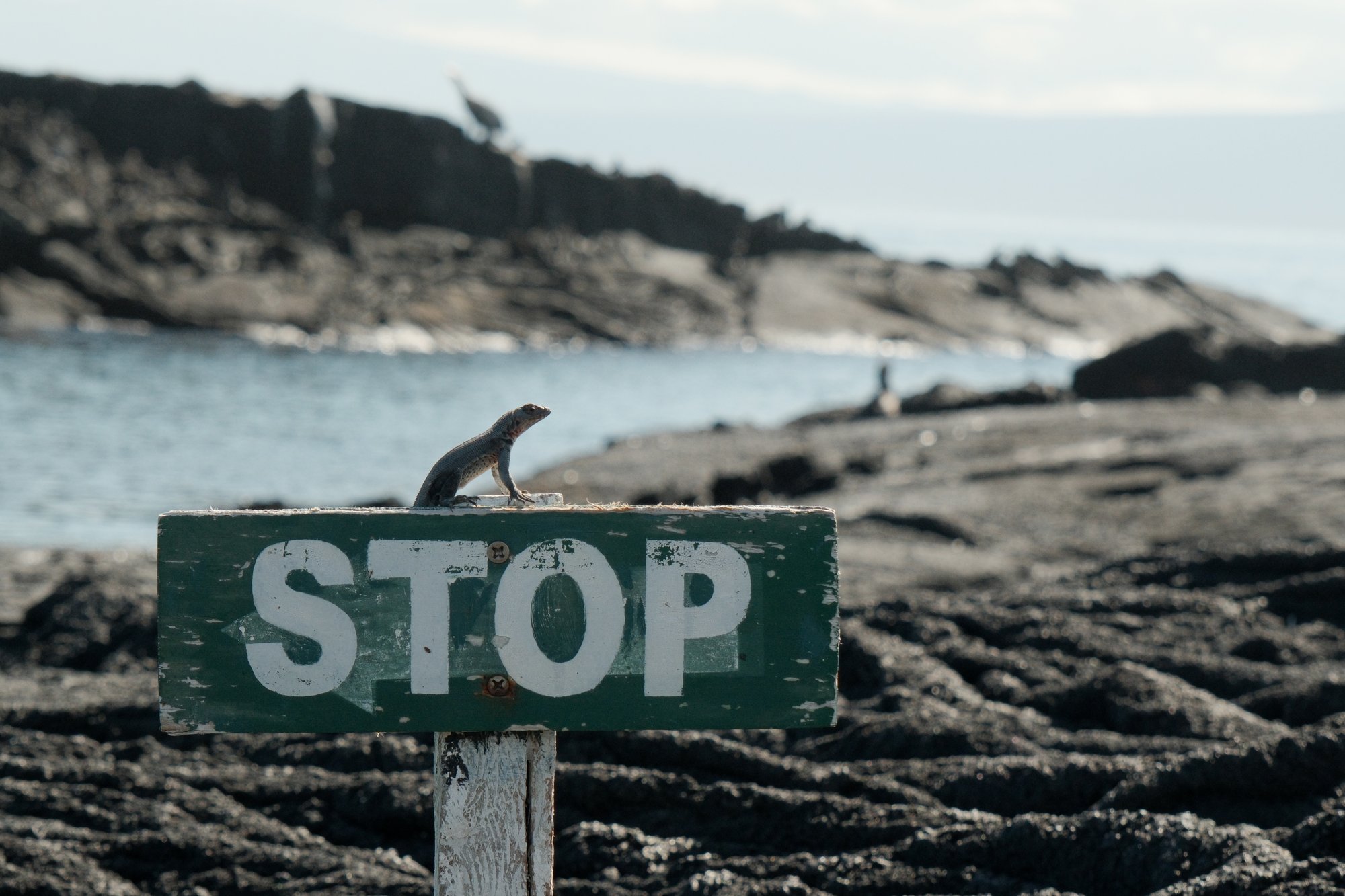 Below are the Galapagos National Park rules everyone must follow when visiting:
Wildlife
- Keep a distance of 2 meters from all wildlife, including cameras.
- Do not touch or feed the fauna.
- Do not remove elements of the ecosystem.
Trails & Sites
- Walk on the marked trails.
- Visit protected areas with an authorized naturalist guide.
- Camp in designated sites with prior authorization.
- Check and respect visiting hours.
- Leave no traces behind.
Environmental
- Do not smoke, drink alcohol, or make campfires.
- Use marine-friendly sun protection products.
- Do not use sound players without headphones.
- Take pictures without flash. Professional shoots require prior authorization. Do not use drones.
- Do not introduce external elements to the ecosystem.
- Use only authorized vivencial fishing boats.
- Do not use motorized watercraft, submarines, or air tourism.
For the complete official rules, visit the Galapagos National Park website.
Climate
The Galapagos has two main seasons:
Warm/Wet Season (January – June)
- Water temperature: 22–25°C (72–77°F)
- Air temperature: 27–32°C (80–90°F)
- Calmer seas, more rain, lush green vegetation
- Great for snorkeling, swimming and enjoying the beach
Cool/Dry Season (July – December)
- Water temperature: 18–22°C (64–72°F)
- Air temperature: 18–24°C (64–75°F)
- Cooler, windier, occasional mist (garúa)
- Best for underwater life
There is no “bad” time to visit, each season offers different experiences.
Wildlife
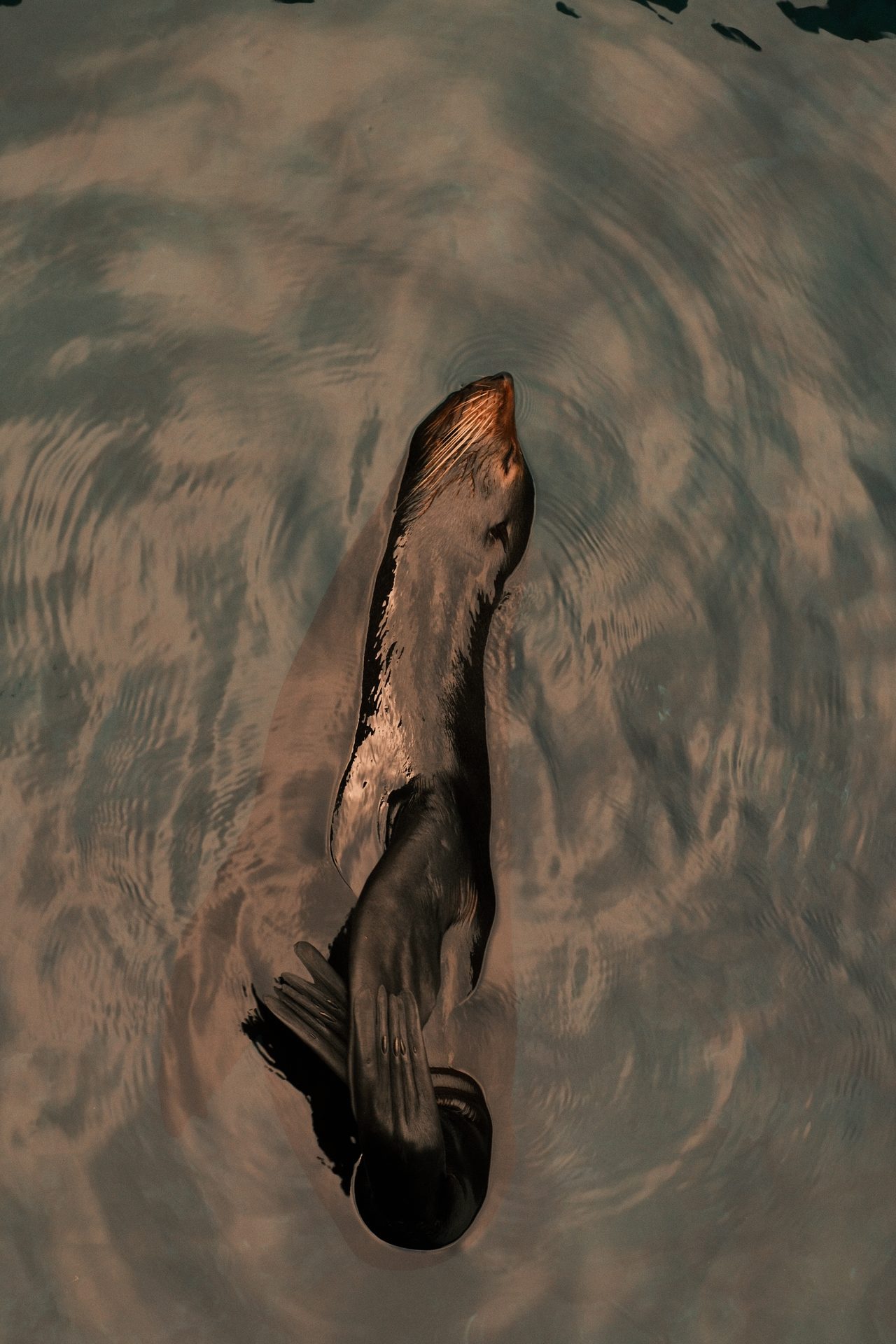
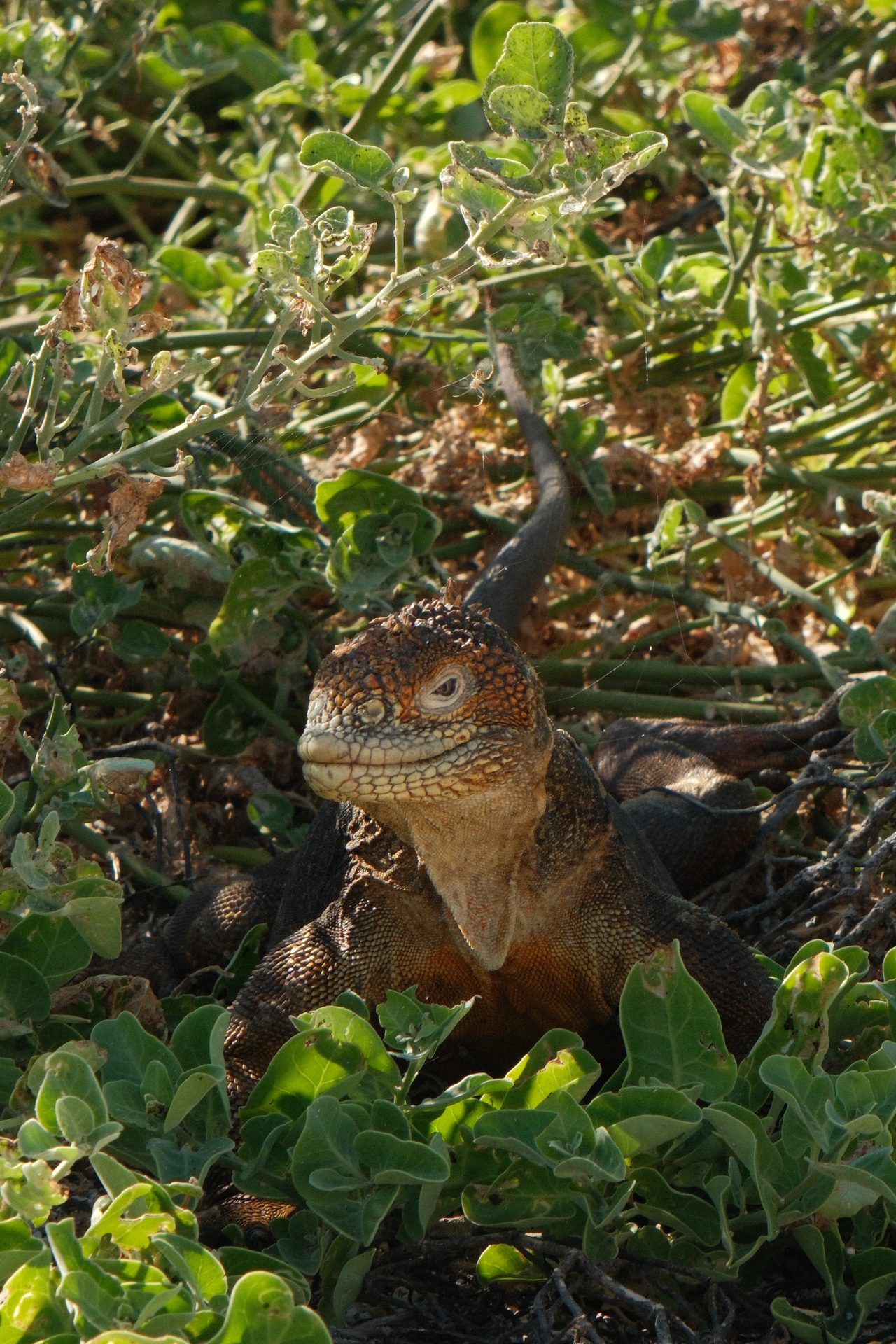
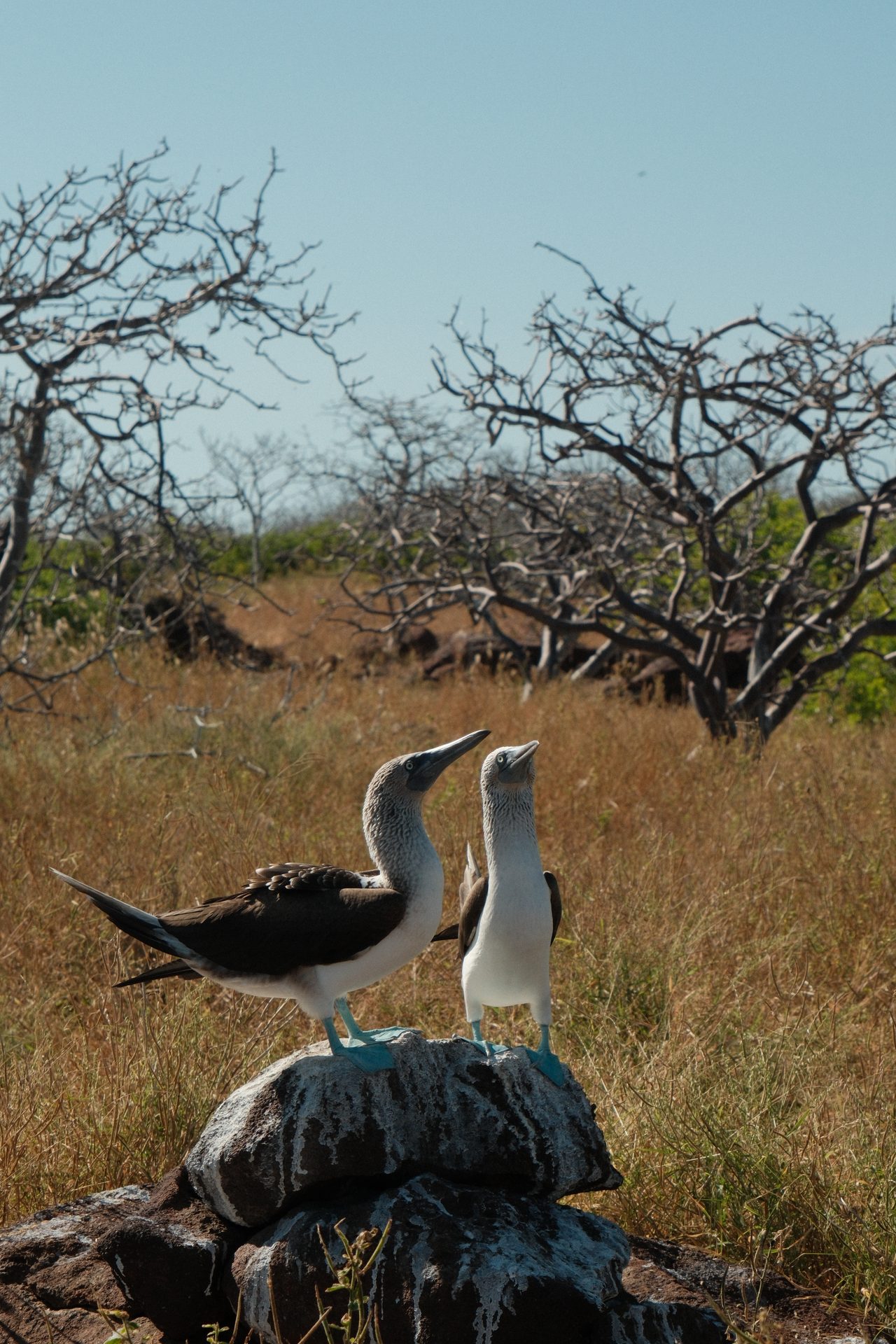
The Galapagos is home to an extraordinary array of species found nowhere else on Earth. Because the islands were never connected to the mainland, many animals evolved in complete isolation and with no natural fear of humans, making wildlife encounters uniquely intimate.
Giant Tortoises - The most iconic Galapagos animal. These slow-moving giants can weigh over 200 kg and live for more than 100 years. Different subspecies evolved separately on different islands. You can see them roaming freely or at the Fausto Llerena Breeding Center, near the Charles Darwin Research Station.
Marine Iguanas - The only seagoing iguana in the world. Found on almost every island, they feed on underwater algae and can dive for over 20 minutes.
Galapagos Sea Lions - Playful and utterly unafraid of humans, sea lions are everywhere: on beaches, docks, and even park benches. Swimming and snorkeling alongside them is a highlight of most visits.
Blue-Footed Boobies - Famous for their bright blue feet and dramatic courtship dance.
Galapagos Penguins - The only penguin species found in the equator. A small endemic population lives year-round near Bartolomé Island and along the coasts of Isabela and Fernandina.
Waved Albatrosses - The largest bird in the Galapagos, with a wingspan of up to 2.5 meters. They nest exclusively on Española Island and are present from April to December.
Darwin’s Finches - The 17 species of finches that Darwin studied here provided key evidence for his theory of natural selection. Each evolved a different beak shape suited to a different food source.
Sharks, Manta Rays, Whale Sharks, Killer Whales, Humpback wales and more - The surrounding waters are hit by: the Panama Current, the Humboldt Current and the Cromwell Current, providing nutrient rich water making it one of the most biodiverse sea life in the world.
Practical Notes
The official language is Spanish. Most tourism staff speak English.
The Galapagos Islands are in the GMT-6 time zone, one hour behind mainland Ecuador (GMT-5).
The official currency in the Galapagos and in continental Ecuador is USD (United States Dollar).
Key Facts at a Glance
UNESCO World Heritage
Designated in 1978, the Galapagos is one of the world's premier natural heritage sites.
97% Protected
97% of the land is Galapagos National Park. Only 3% is inhabited by humans.
1,000+ Species
Home to over 1,000 plant species, 300 fish species, and hundreds of endemic animals.